Introduction
Georgsmarienhütte GmbH, one of Europe’s leading steel producers, relies on efficient cooling and water treatment processes to maintain stable operations. In steel production, cooling water absorbs heat from equipment but also carries dirt and fine particles that must be removed continuously.
Process Overview
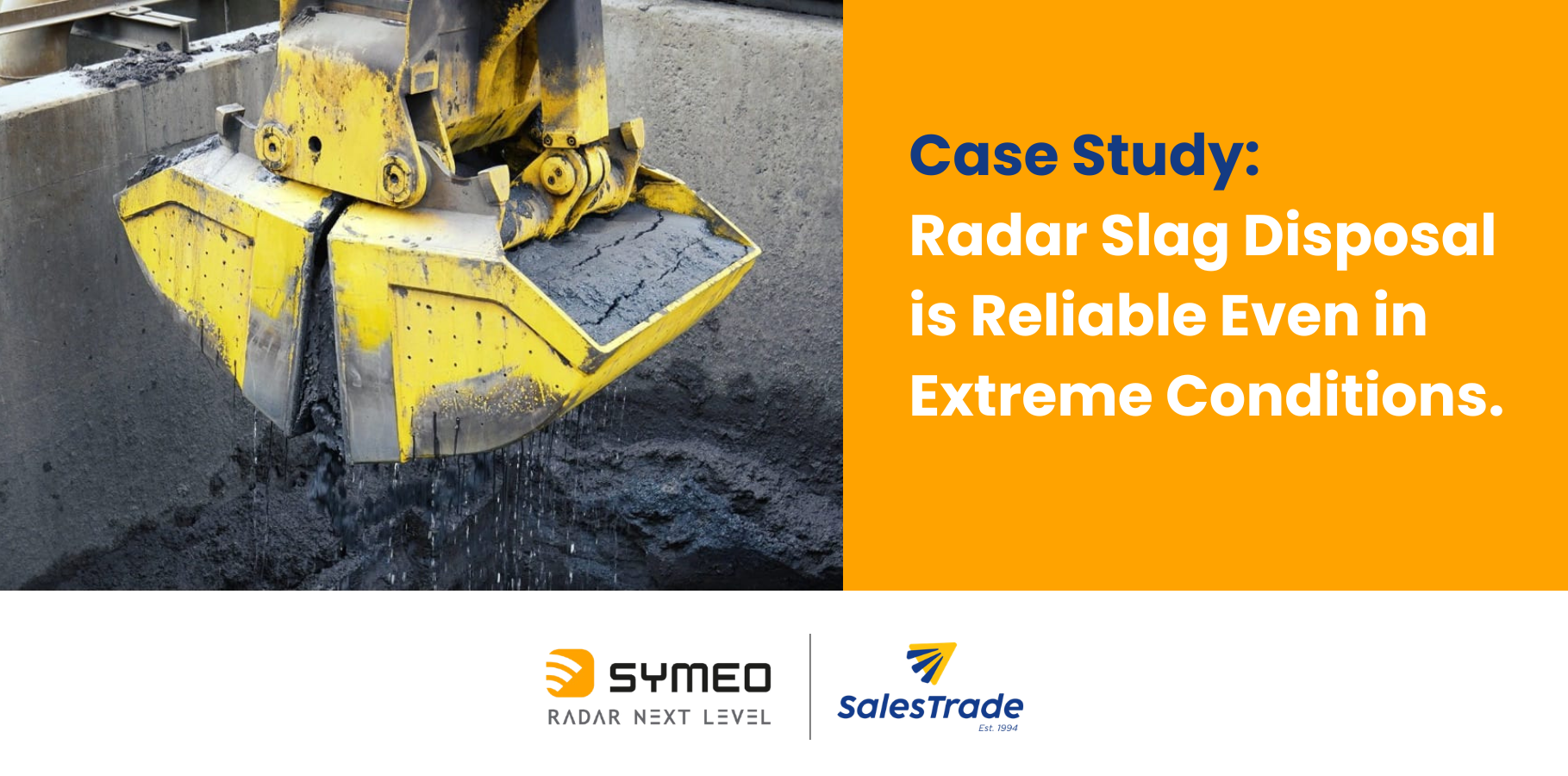
The contaminated water is filtered, and the remaining particles settle in a slag drying basin, forming sludge (slag). Over time:
- Slag accumulates at the bottom of the basin
- A gate collects it at one end
- A crane transfers it to a secondary basin for further drying and disposal
This process is essential to keep the cooling system running efficiently.
Challenge
The dredging of the slag basin was manual and inconsistent:
- An operator had to physically check the fill level
- Dredging was manually triggered
- Fluctuating levels made timing difficult
Attempts to automate using ultrasonic sensors failed due to harsh environmental conditions, including:
- Rain and storms
- Snow and extreme temperatures
- Surface disturbances from sludge and water
These factors caused unreliable readings and disrupted operations.
Solution
A radar-based approach using the Symeo LPR-1DHP-350 was tested. Unlike ultrasonic sensors, radar technology is far less affected by environmental interference.
The system was:
- Quick to install
- Maintenance-free
- Capable of reliable level measurement despite harsh conditions
The sensor continuously monitored the basin’s fill level and automatically triggered the excavator to begin dredging when needed.
Result
After several weeks of testing, the system proved stable and accurate. The operation was successfully transitioned into permanent use, delivering:
- Reliable automation of dredging
- Reduced manual intervention
- Improved efficiency and process consistency